
The Mentors on the Floor: How the NIAT Robotics Team Runs Makers Conclave
Makers Conclave is run end to end by the NIAT Robotics Team from selection and kits to floor mentoring and judging support.
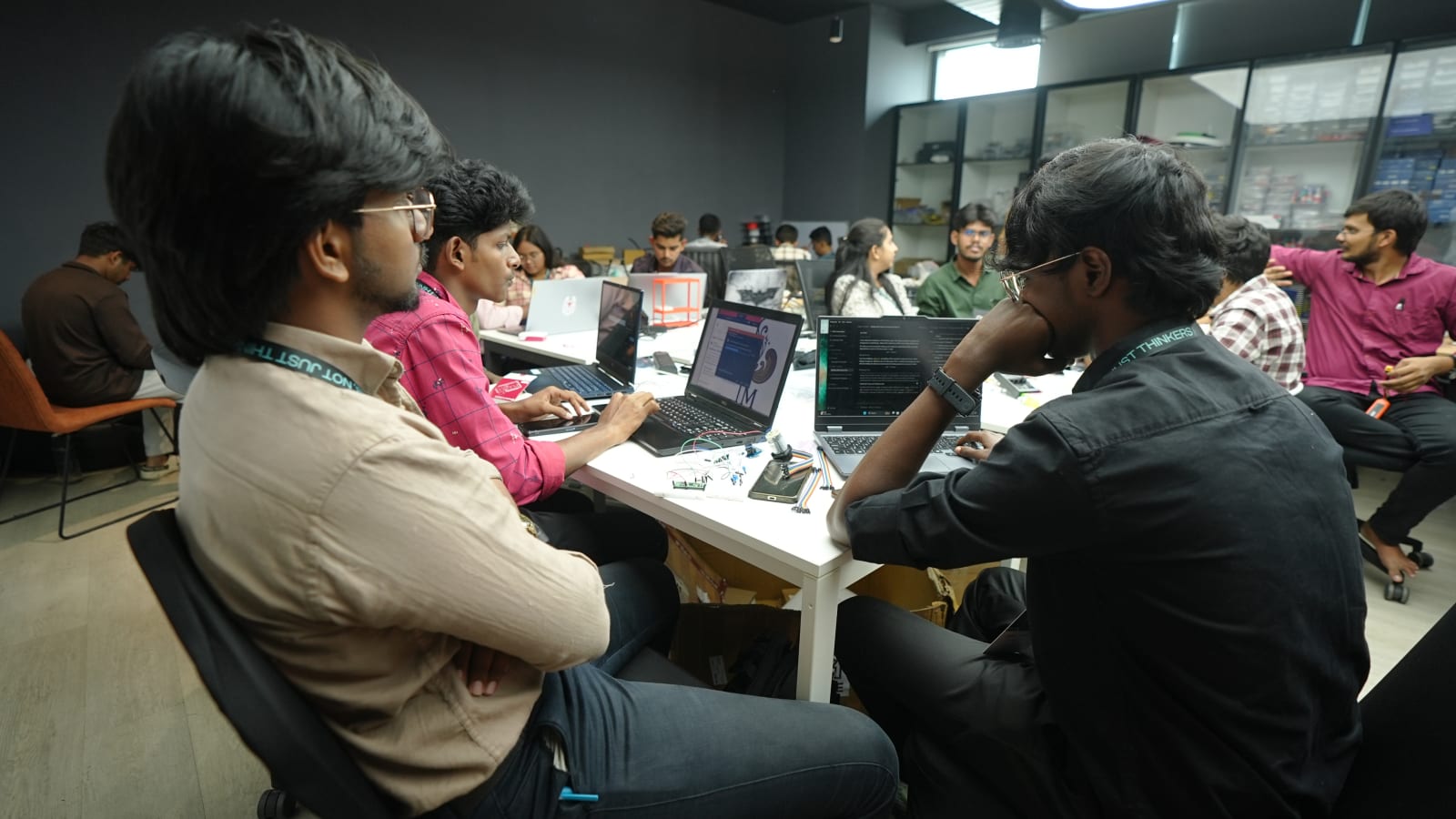
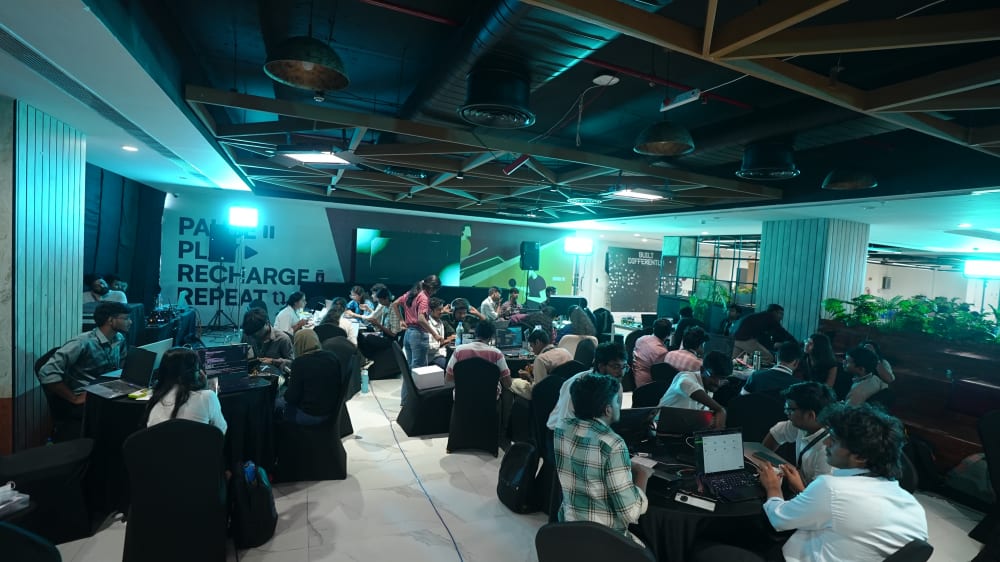
Behind the 54 teams on the expo floor at NIAT KKH is one team that owns the whole event: the NIAT (NxtWave of Innovations in Advanced Technologies) Robotics Team. They designed and ran the selection pipeline that chose these teams, prepared the hardware kits waiting at every table this morning, and now own every day of the build, registration, kit distribution, floor mentoring, workshops, judging support, and the end of day briefings that keep 200 students synchronised. NIAT's Makers Conclave has a single owner structure by design, and this is what that ownership looks like in practice.
Before Day 1: the invisible work
The event most attendees see began at 9am today. The event the NIAT Robotics Team ran began weeks earlier.
The selection pipeline, open contest, proposal submission, mid level evaluation, finals, was theirs to design and execute across 14 campuses, producing the 54 teams now on the floor. Kit preparation was theirs too, against a hard readiness deadline days before the event: every sensor, board, and component at every table this morning, verified and complete. A build event lives or dies on kit integrity, one missing driver board doesn't delay one team by an hour, it can end their event, which is why kit readiness had its own named owner and its own deadline in the event plan.
Day 1: the mentoring philosophy
Today, the Robotics Team's role is floor mentoring, and their philosophy is visible if you watch the expo floor for ten minutes: circulate, observe, unblock, but don't take over.
That restraint is principled, not passive. The builds must remain the students' work, for a reason that becomes concrete on Saturday: the jury will probe exactly that. Judging at Makers Conclave goes below the surface, why this sensor, why this architecture, what's the failure mode, what did you try that didn't work, and fluent answers only come from students who made the decisions themselves. A mentor who solves a team's sensor fusion problem for them has also quietly disqualified the learning, and possibly compromised the team's ability to defend their build under questioning.
What mentors do provide is pattern recognition, and it's worth understanding why that's so valuable. Most hardware failures on a build floor are variations of known problems: power rails browning out under motor load and resetting the microcontroller; I2C address conflicts when two sensors ship with the same default; grounding issues that manifest as phantom noise; timing bugs that only appear when the system runs at full speed. A student team can lose a full day to any one of these, because the symptom rarely points at the cause. An experienced mentor recognises the pattern in minutes and can compress a day of student debugging into a twenty minute conversation, asking the questions that lead the team to the answer, without writing a line of the fix.
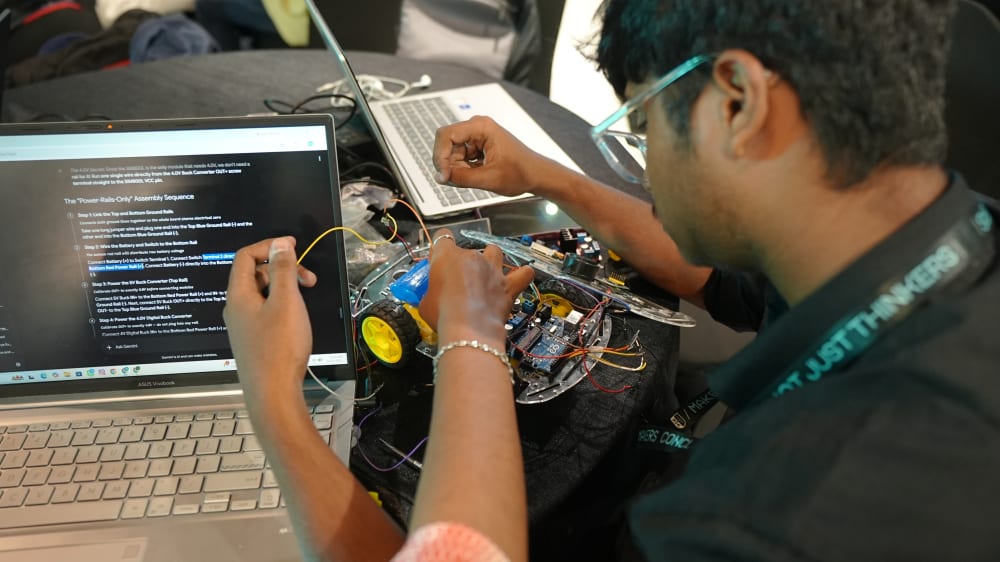
That compression, multiplied across 54 teams and three days, is arguably the single largest value add in the event's design. It keeps teams moving without moving for them.
Day 2: teaching mode
Tomorrow, the Robotics Team shifts from mentoring to teaching. Two workshop slots run on the main stage: the first, from 11am, for all Makers Conclave teams; the second, from 3pm, an advanced session. The workshops are wrapped around continued build and testing time, so teams apply what they learn the same afternoon, a deliberate loop between instruction and practice.
Day 2 also closes with the briefing that matters most: the final walkthrough of Saturday's judging criteria. No team at Makers Conclave walks into judgment day guessing what the jury values. The standard is stated in advance, functional demonstration, technical depth, real world applicability, at national competition level, and teams get a full evening and morning to prepare against it.
Day 3: the jury side
On Saturday, the team moves to the evaluation side: supporting the expo walkthrough as industry guests and jury visit all 54 zones from 10am, and supporting the live judging process on the main stage through early afternoon. Their intimate knowledge of every build, accumulated across three days of floor observation, makes them the connective tissue between the teams and the external jury.
The judgment calls mentors make all day
The hardest part of the mentoring role isn't technical, it's calibration, and it's worth appreciating because it happens dozens of times a day across the floor.
Every intervention is a judgment call on a spectrum. Say too little and a team burns six hours on a grounding issue that a hint would have resolved in twenty minutes, hours that, in a three day build, may cost them their Saturday demo. Say too much and the mentor has done the engineering, hollowing out both the learning and the team's ability to defend the decision under jury questioning. The skill is finding the minimum sufficient nudge: the question that redirects attention ("what does your rail voltage do when the motors start?"), the reference to a known failure class ("check your I2C addresses"), the suggestion to instrument rather than guess.
There's a triage layer on top of that. With 54 teams and a finite mentor pool, attention itself is a resource to be allocated: the team that's quietly stuck needs finding, struggling teams rarely wave flags, while the team that's loudly demanding help may just want validation. Reading a floor, distinguishing productive struggle from destructive stall, and spending mentor minutes where they change outcomes is a management discipline as real as any technical one.
Watching the Robotics Team work the floor today, that calibration is the visible craft: a few minutes per zone, more questions than answers, and teams left moving under their own power.
The mandate that outlasts the event
There's a final responsibility that extends past Saturday's ceremony: selection to national pipelines. Identifying the strongest builds for competitions like the Smart India Hackathon is an explicit success metric for the event, the target is a minimum of ten projects assessed as strong enough to develop further and pursue nationally. That assessment isn't a separate exercise conducted after the event; it's happening continuously, on the floor, as mentors watch how teams work, not just what they produce. How a team debugs, how it responds to setbacks, how deeply its members understand their own decisions, these are pipeline signals as much as the final demo is.
Why single ownership works
The event brief behind NIAT's TakeOver 2026 states an operating principle worth quoting: one owner per area, shared ownership is no ownership. Makers Conclave is that principle at full scale. One team owns selection, kits, mentoring, workshops, judging support, and pipeline assessment, which means one team carries the accountability for the whole arc from campus contest to national competition. The 54 teams on the floor experience the result as coherence: the people who chose them, equipped them, and mentored them are the same people briefing them on how they'll be judged.
The build continues through tomorrow's workshops. Saturday, the floor they've run all week goes public.