
Inside the Build Floor: Day 1 Morning at NIAT Makers Conclave
From kit distribution to first prototypes inside the opening hours of the NIAT Makers Conclave build floor at TakeOver 2026.
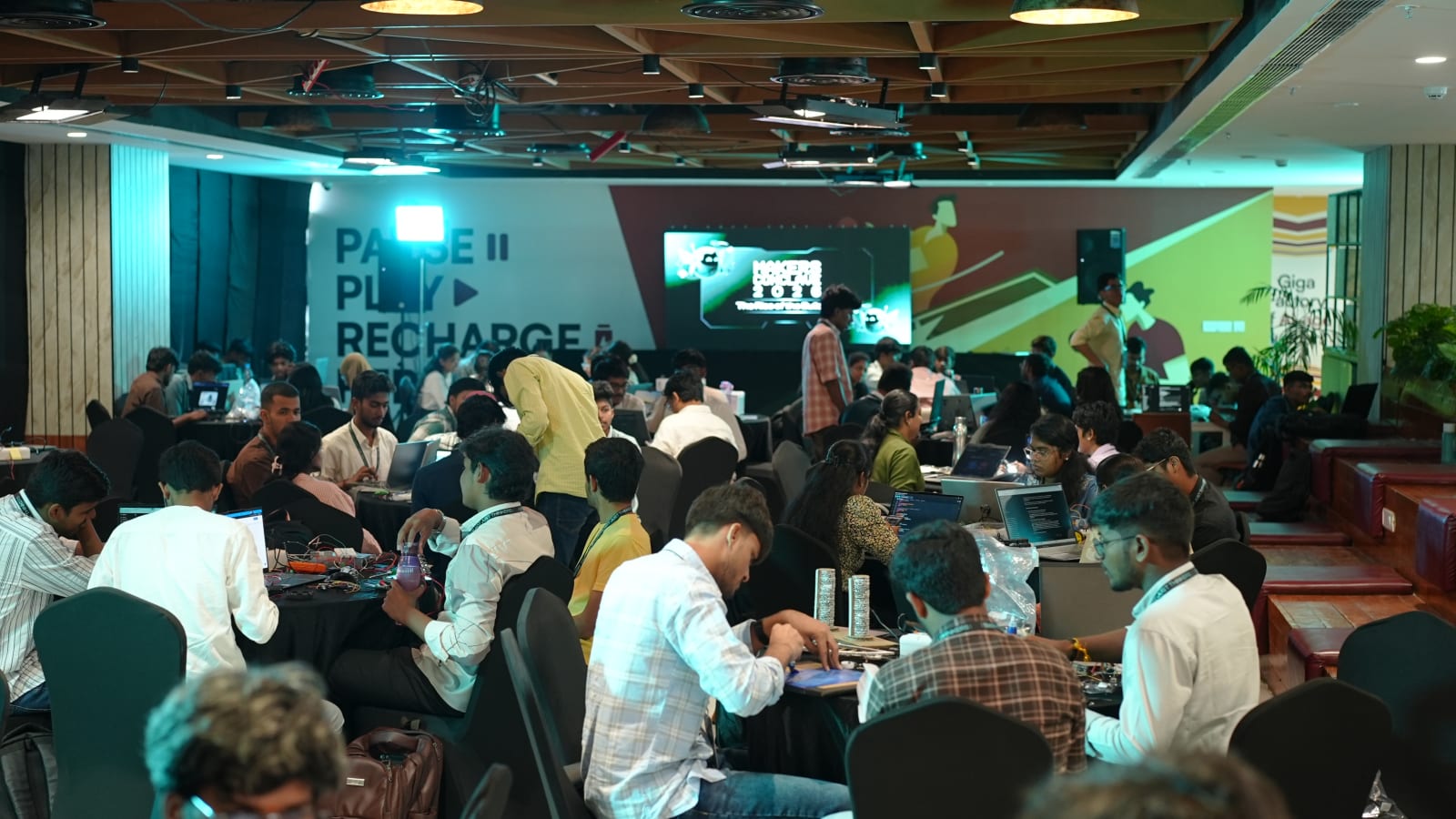
The expo floor at NIAT KKH Campus turned into a working lab this morning. By mid morning, the transformation was complete: 54 build zones, each with tables and dedicated power points prepared by the Facilities Team before 9am, occupied by teams unpacking hardware and getting to work. If you want to understand what NIAT's Makers Conclave actually is, the first morning of the build floor is the clearest possible answer.
The first hour: registration to build zones
Registration opened at 9:00am at the entry arch, with Makers Conclave teams checking in and collecting kits. The 9:00 to 10:30am window covered campus orientation and zone assignment. Every team walked the floor, found its table, and received its hardware and components. By 10:30am, the build phase had formally begun.
The logistics behind that clean start are worth a sentence, because they're invisible when they work. Getting 200 students from 14 campuses through check in, orientation, and kit distribution in ninety minutes, with every table powered and every kit complete, is the product of a Facilities Team deadline that put all materials at the venue days before the event, and a Robotics Team that owns the full day end to end. Events earn their credibility in the first hour, and this one opened on time.
The particular energy of hour one
The first hours of a build event have a rhythm that anyone who has done hardware will recognise. Teams unpack kits and verify components against their build plans. Roles get divided, someone on mechanics, someone on electronics, someone on firmware, someone keeping the integration picture. And then, usually before lunch, the first unexpected problems arrive.
A sensor reads differently than the datasheet promised. A motor driver needs rewiring. Firmware that compiled perfectly at the home campus refuses to build here because of a toolchain version nobody thought to check. A power rail sags the moment the motors spin up, resetting the microcontroller mid test.
None of this is a failure of preparation. It is the entire point. Makers Conclave is designed to create exactly this environment: real hardware, real constraints, no simulation. The gap between "it worked at home" and "it works here, now, on this table" is where engineering judgment gets built, and the teams that close that gap fastest are usually the ones that took integration seriously before arriving.
Mentors: observe and unblock, not direct
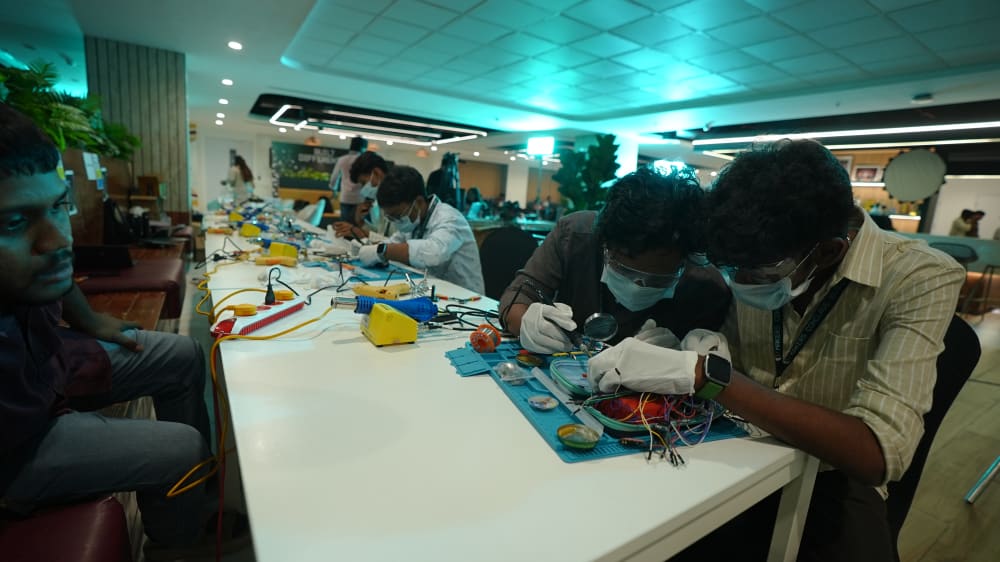
Mentors from the NIAT (NxtWave of Innovations in Advanced Technologies) Robotics Team are moving between zones throughout the day, and their operating philosophy on Day 1 is visible if you watch the floor for ten minutes: circulate, observe, unblock, but don't take over.
The distinction matters for two reasons. First, the builds must remain the students' own work, because Saturday's jury will probe exactly that. Teams will be asked why they chose this sensor, this architecture, this failure handling approach, and fluent answers only come from students who made the decisions themselves. Second, most hardware failures on a build floor are variations of known problems: brownouts under motor load, I2C address conflicts, grounding issues, timing bugs that only appear at full speed. An experienced mentor can compress a day of student debugging into a twenty minute conversation without writing a line of the fix, and that compression, not the fix itself, is the value they add.
The afternoon: protected build time
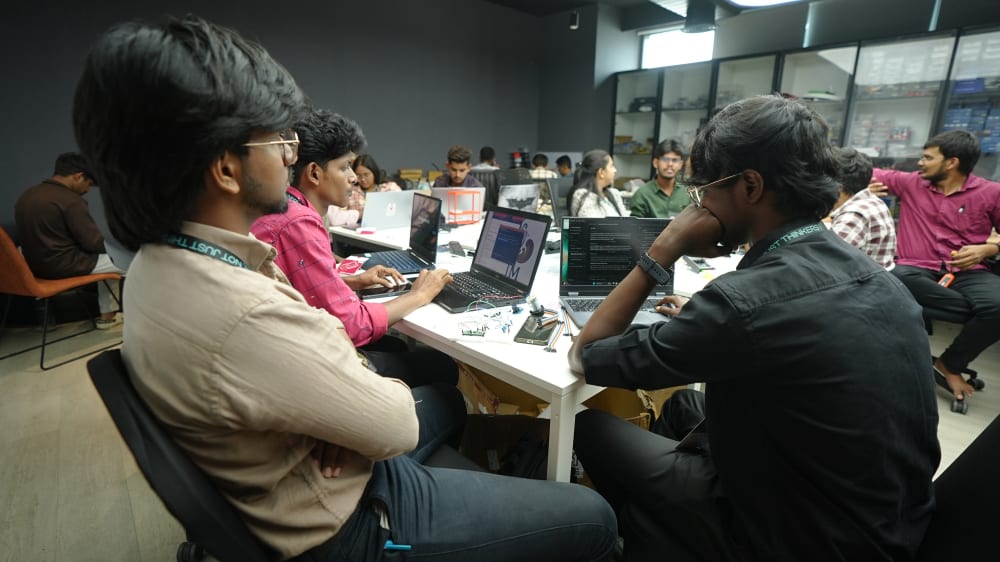
After the 1:00 to 2:00pm lunch break, students manage their own food throughout the event, the schedule does something deliberately unusual for a flagship event: nothing. From 2:00pm to 5:30pm, the floor runs as open, uninterrupted build time. No sessions, no speakers, no mandatory activities.
That is a design choice, not an empty slot. Deep hardware progress happens in long unbroken stretches, and every interruption costs more than its duration, context gets dropped, half finished wiring gets forgotten, debugging threads get lost. Day 1 protects the single most valuable resource a build team has: continuous time with the hardware.
What the floor looks like by domain
Walk the 54 zones this afternoon and the six project domains of Makers Conclave 2026 are all visibly at work. Health tech teams are characterising sensors, the domain where signal quality against the noise of the human body decides everything. Agriculture teams are stress testing enclosures and power budgets for devices that must survive real fields. Safety and disaster response builds are tuning edge inference, because their entire value lives inside a latency budget measured in milliseconds. Environment teams are wrestling with calibration, the difference between a demo and an instrument. And at the smart systems end, the most ambitious builds on the floor are debugging coordination logic across multiple autonomous units.
The domain spread matters even on Day 1, because different domains fail differently. A health wearable's first day crisis is usually signal noise; an agritech build's is power architecture; a drone team's is control loop stability. The Robotics Team mentors are effectively triaging six different failure taxonomies simultaneously as they move across the floor, one more reason experienced pattern recognition, rather than generic encouragement, is what the mentoring layer exists to provide.
Several teams across these domains arrived with builds already deployed in real world settings, and their zones are noticeably calmer today: deployment experience means the integration surprises were survived months ago. For everyone else, today is the day those surprises arrive.
The wrap: what teams learn tonight
The day closes between 5:30 and 6:30pm with a Robotics Team briefing covering two things. First, the Day 2 schedule. Tomorrow adds two robotics workshop slots on the main stage, an all teams session in the late morning and an advanced session in the afternoon, wrapped around final build and testing time. Second, the Day 3 judging format: how the Saturday expo walkthrough works, when live judging happens on the main stage, and what the jury will evaluate.
Teams then secure their hardware on the floor overnight, so tomorrow morning begins exactly where tonight ended, no teardown, no transport, no reassembly risk.
Why today matters most
By Saturday morning, every prototype on this floor needs to demonstrate live in front of industry guests and a jury judging to national competition standard. There is no video fallback and no second attempt. That deadline gives Day 1 its real weight: the teams that stabilise their core function today, identify their riskiest subsystem early, and bank margin for the failures that haven't happened yet are the teams that will look calm on Saturday.
The clock started this morning. Fifty four teams are on it. We'll be on the floor all week, domain spotlights from every corner of the expo start tomorrow.